
As a young, fair-skinned boy growing up in North Africa, speaking was a point of struggle for me. I was living in the post-colonial period, a time where Arabization and renewed Islamic fervor were displacing western colonial influences across society. I was caught in crosscurrents that I was too young to comprehend. I remember being bullied by gangs of boys in our neighborhood streets, and I struggled academically in a French-speaking school. This combination produced a gnawing insecurity in me. I felt vulnerable, unsure of my place in the world. Whenever I was called on to read aloud in class, recite a poem, or give explanations, my anxiety would spike. My thoughts would fog up as I stammered my way through a response.

Yet insecurity was not the end of my story.
I surrendered my life to Jesus at age 15. It led to the experience of God’s love poured into my heart by the Holy Spirit in a tangible way. I started experiencing a transformation within — as the Father’s powerful love invaded my soul, all that inner
insecurity receded. I no longer questioned who I was or whether I had value. This amazing experience of God’s love also strengthened my voice in a noticeable way. I didn’t expect that!
My transformation made me think more deeply about how God uses our words. Are you a person who tends to use a lot of words, or just a few? Do full sentences flow out rapidly and effortlessly, or do you think about something for a long time before speaking? Maybe you’re a little of both, depending on who you’re with or the depth of the conversation. When reading about a particular person in the Bible, have you ever wondered how they might have expressed themselves?
Moses admitted that he was “slow of speech and of tongue.” Aaron, on the other hand, was identified by God as someone who could “speak well.” Jeremiah said that he was “too young” to be God’s spokesman, perhaps implying that his lack of confidence made him struggle to speak publicly. It was said of Paul that his speech was “of no account,” while Apollos is explicitly mentioned as “eloquent.” Additionally, Peter was often shown to be quite impulsive with his words. But ultimately, the particular way in which they spoke, and we speak today, is not the real issue. What is important is the effect of our words.
What did their speech produce in the lives of those who heard them? Paul talked about how his gospel words had a deep impact on those who heard them. He says, “Our gospel came to you not only in word, but also in power and in the Holy Spirit and with full conviction”. What caused Paul, who was likely not the most eloquent speaker, to become a man whose words had such lasting spiritual impact? This is not merely a question about Paul; it invites each of us to consider what God can do through our own words.
There’s a question I have been asking myself and invite you to think about. What keeps you from believing that your words can have spiritual impact?
Impact is not tied to the natural ability or confidence of the speaker. You may be a reluctant or a bold speaker, an eloquent or an awkward one. It doesn’t matter. If you ask the Holy Spirit to shape your speech, He will add something that your personality, intelligence, or technique cannot produce. He adds His power, His wisdom, His love, and His weight. Because of His presence in us, even words spoken in weakness can impact a person and continue shaping something for years to come. I have seen this truth confirmed in unexpected ways throughout my life.
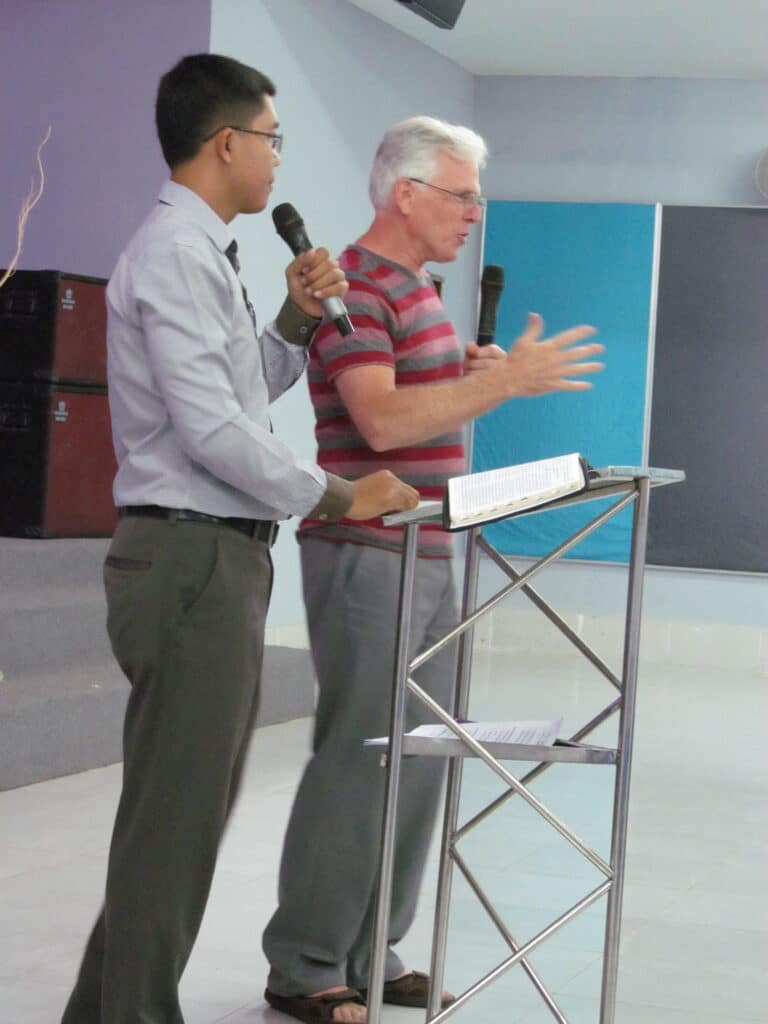
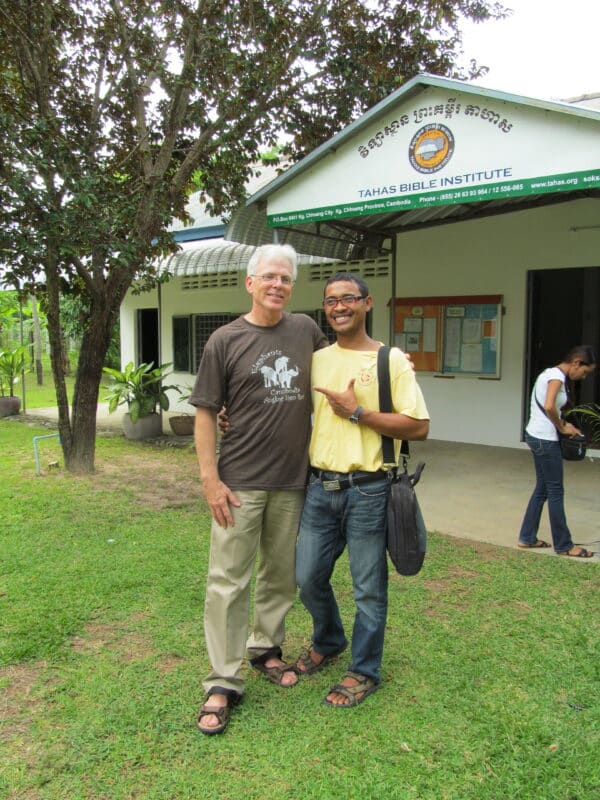
As I traveled around the world as a missions pastor, I spoke in all kinds of places. Sometimes in large formal gatherings, but most often, it was around a meal, driving in a car, or sitting in a living room. I’ve lost track of all the words I’ve spoken in those places! But what surprises me again and again is when someone will say to me: “I’ll never forget something you said when…” and then refer to a moment, often years earlier, when just a few words I had spoken had shaped something in them that continues to have impact in their life today. Most often, I can’t even remember the conversation they referenced or the specific thing I said.
Where do these words, often spoken without any consciousness of power, come from? How is it that they keep bearing fruit long after the moment they are spoken? Paul gives us the answer. He says, “And we impart this (i.e. the good news) in words not taught by human wisdom but taught by the Spirit…”. Being taught by the Holy Spirit is guaranteed to affect our speech. The words He teaches us are fruit-bearing and have an impact long after they are spoken. Jesus said that this would be a major part of what the Holy Spirit would do when He is received by us. “When He comes…He will glorify me, for He will take what is mine and declare it to you” (John 16:14). 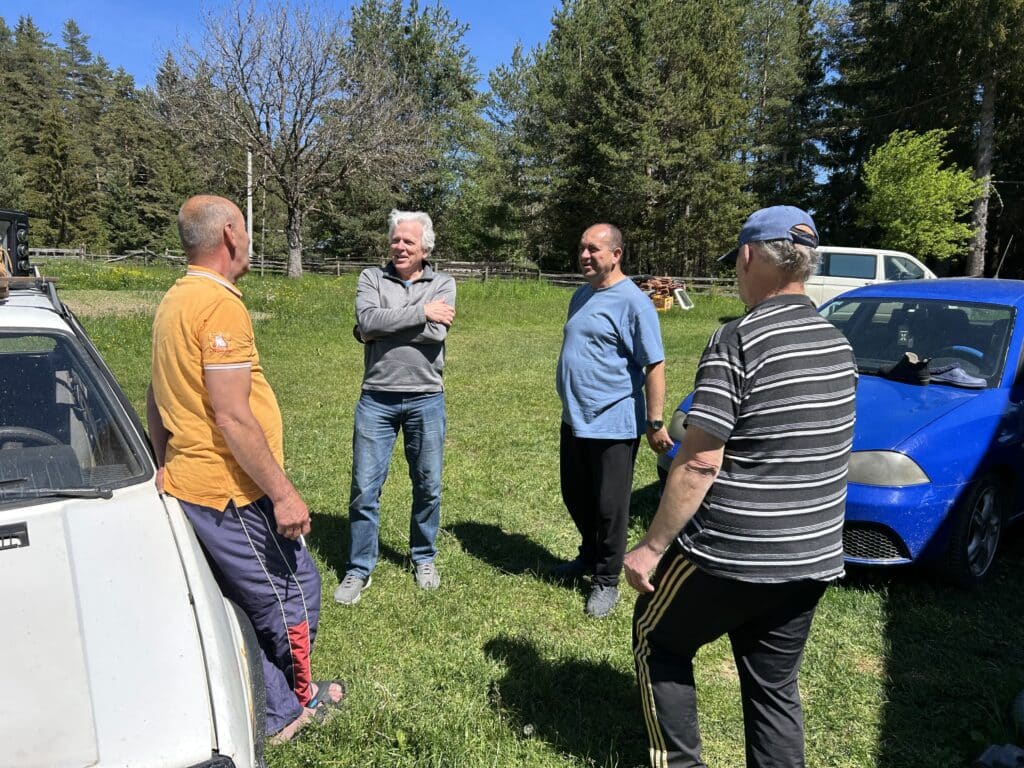
If we will seek Him, the Holy Spirit is ready to give us increased insight into God, and this insight will shape our speech. Paul explains in 1 Corinthians 2 that it is because the Spirit searches the depths of God and we have received that Spirit who is from God, so that we might understand the things freely given to us. Then, in verse 12, he states, “and we impart this in words not taught by human wisdom but taught by the Spirit.” So, there it is… the outcome of the Holy Spirit’s teaching is that your words will produce speech that has a long-lasting spiritual impact.
This brings us back to our own fears and insecurities.
Here’s an important question: are you someone who feels insecure in your ability to impart spiritual speech to others? If so, where does that insecurity come from? Do you routinely think that others are much more equipped to do this?
The Scriptures confirm that one of the effects of the Holy Spirit’s coming is that insecure speech will be transformed. This was prophesied in Isaiah 32:4: “The tongue of the stammerers will hasten to speak distinctly,” and this would happen when the Holy Spirit is poured out upon us from on high (vs. 15). Through Christ’s healing love, our insecurities vanish, for He does not give us a spirit of timidity. This is why Peter draws the connection in his epistle between the Holy Spirit in you and His words through you that are said to be “oracles of God.” I Peter 4:11 says, “If anyone speaks, let it be as one who speaks oracles from God.”
God can transform both our confidence and our speech. The lives of Moses, Aaron, Paul and Peter—and my own—bear witness to this truth. As a struggling teenager, I could only see my limitations. But now, through Christ, I can confidently say that the old has passed away! By His Spirit, my words can have a lasting impact for His glory. I am confident that your words can, too.
Learn more about missions at West Shore Free Church.
Hear Ian Campbell reflect on his nearly 20 years in ministry.
